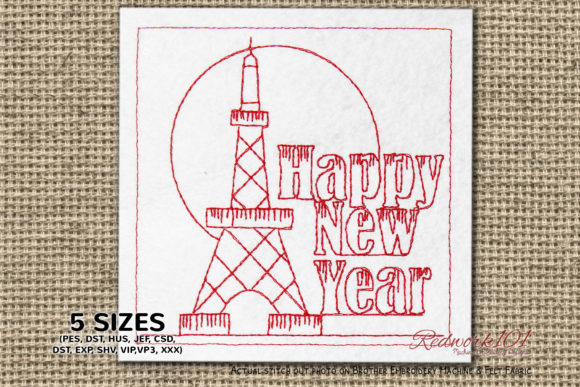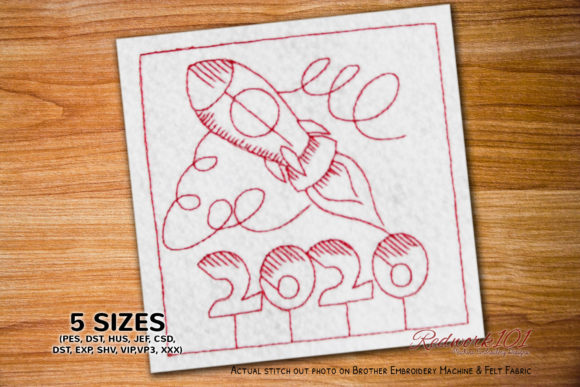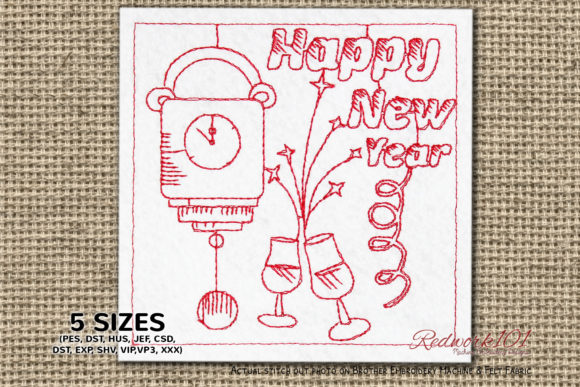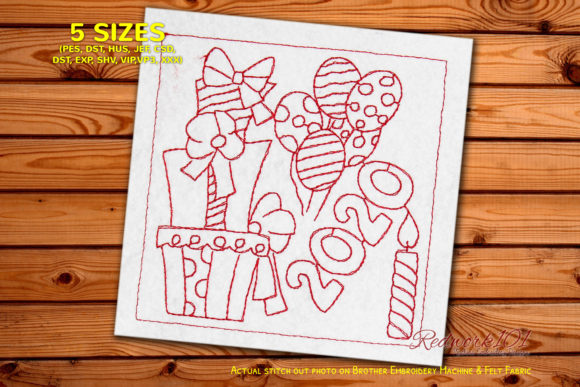
New Year Collage Design
First Impression: Festive, Layered, and Booth-Ready
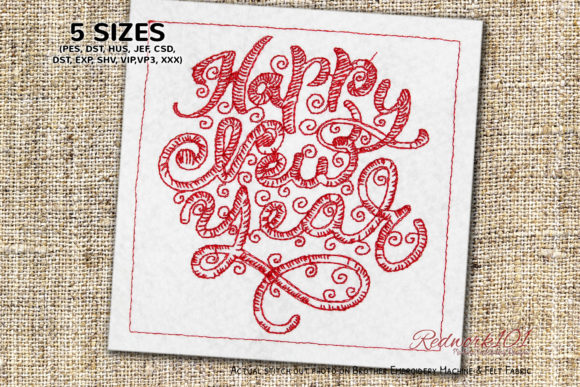
As an embroidery designer who’s prepped over 200 craft fair booths—from snowy winter markets to sun-drenched summer bazaars—I opened New Year Collage Design expecting something joyful but not overwhelming. What I found was a smart, festive composition that lands somewhere between modern collage art and handmade charm. It doesn’t scream “party noise”—no glitter fonts or cartoon fireworks—but instead invites closer looking: layered elements, intentional negative space, and visual rhythm that reads well both on a 4-inch tea towel corner and a full-front tote bag. That balance is rare. It feels celebratory without aging by January 3rd. For boutique makers and Etsy sellers building a cohesive New Year collection, this isn’t just a design—it’s a versatile Backgrounds asset with personality.
Where It Shines: Product-by-Product Reality Check
Tote bags: A standout. The scale and composition of New Year Collage Design fills the lower third beautifully—eye-catching from three feet away, detailed enough to reward a second glance at the booth table. No need for extra borders or framing; it holds its own.
Aprons and tea towels: Excellent as a centered chest or corner motif. Because it’s designed as an Embroidery background—not a dense all-over fill—it breathes on textured cotton and linen blends. On waffle-weave tea towels, the stitch definition stays crisp if you use medium-weight cutaway stabilizer.
Patches and pouches: Works best at 3–4 inches wide. Smaller than that, and subtle layering details soften. As a sew-on embroidered patch, it adds instant handmade credibility—especially when backed with iron-on adhesive and finished with merrowed edges.
Caps and pillow covers: Use caution. The Box Stitch (mentioned as optional in the description) adds dimension but increases stitch density—on curved cap surfaces, that can cause puckering unless hooped tightly and stabilized aggressively. For pillow covers, go large (6+ inches) and place it center-back or lower-front where fabric lies flat.
Market bags and handmade gifts: This design elevates perceived value. Paired with natural canvas or oatmeal linen, it reads premium—not mass-produced. Customers consistently pause longer at items featuring thoughtful, non-generic compositions like New Year Collage Design.
What Makes It Sell—And What Makes It Stall
At a craft fair, attention lasts 2.7 seconds. New Year Collage Design wins that blink test: it’s bold enough to register instantly, yet intricate enough to feel worth touching. Unlike single-word monograms or minimalist icons, it sparks conversation (“Is that vintage postcards? Is that confetti?”). That engagement converts.
But clarity depends on execution. Tiny lettering or fine inner linework may blur on dark fabric or thick terry cloth—so always test thread contrast first. And while the outer Box color is often different (per the product description), that variation only strengthens brand consistency *if* you control it. Choose one accent thread—gold, deep navy, or burgundy—and repeat it across your entire New Year line (totes, patches, aprons) for instant cohesion at your booth.
Production Notes Every Embroiderer Should Run Before Cutting Fabric
- Test on scrap fabric first—especially if using textured towels, fleece-lined pouches, or curved cap fronts.
- Check thread contrast on both light and dark base fabrics. A pale gold thread vanishes on cream linen unless you add a shadow underlay.
- Review spacing and stitch density. Dense areas may require reduced speed or topping stabilizer to prevent thread breaks during batch production.
- Confirm hoop size compatibility before digitizing adjustments. If the design pushes 5x7" limits, consider offering two versions: full-size for totes, simplified for patches.
- Use the right stabilizer: medium cutaway for stable wovens (aprons, totes); tear-away + topping for knits or textured towels.
- Create at least one real mockup—not just a digital preview. Light, fabric drape, and stitching tension change everything.
- Compare fabric colors side-by-side. That “different outer Box color” note means flexibility—but only if you’ve seen how each thread interacts with your actual inventory.
- Confirm commercial licensing before selling finished products. Since this is a digital embroidery file, ensure your license covers resale of physical goods—especially important for Etsy sellers and small shop owners.
Why It Strengthens Your Booth—and Your Brand
A strong craft fair product does three things: stops scrolling, supports storytelling, and scales across formats. New Year Collage Design delivers on all three. It gives your booth visual rhythm—pair it with solid-color totes and neutral aprons, and suddenly your table feels curated, not cluttered. It reinforces handmade quality because the layering suggests intention, not automation. And it’s repeatable: same design, five products, unified mood. That consistency builds trust. When customers see the same thoughtful composition on your tea towel embroidery, embroidered patch, and market bag design, they begin to recognize your aesthetic—before they even know your shop name.
Final Thought: A Background That Carries Weight
In embroidery, “background” doesn’t mean passive. New Year Collage Design is active space—it frames your product, sets the season’s tone, and quietly signals craftsmanship. It’s not filler. It’s foundation. For creative entrepreneurs launching New Year collections, stocking Etsy shops, or building a signature line for handmade markets, this machine embroidery design isn’t just timely—it’s timeless enough to rework into Valentine’s or Spring collections with minor color swaps. Just remember: great design assets don’t sell themselves. They sell when paired with smart fabric choices, disciplined testing, and the confidence to let handmade texture shine through.