Girl in Liberating Applique
First Impression: Bold, Modern & Unapologetically Handmade
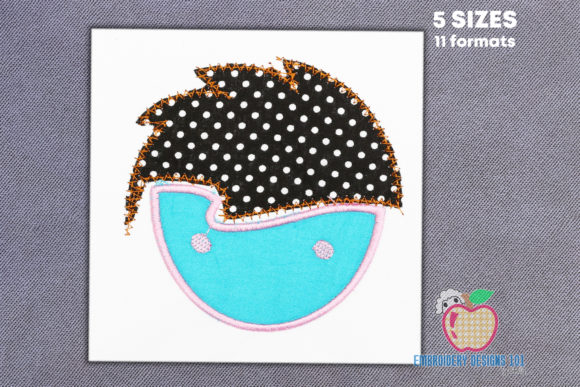
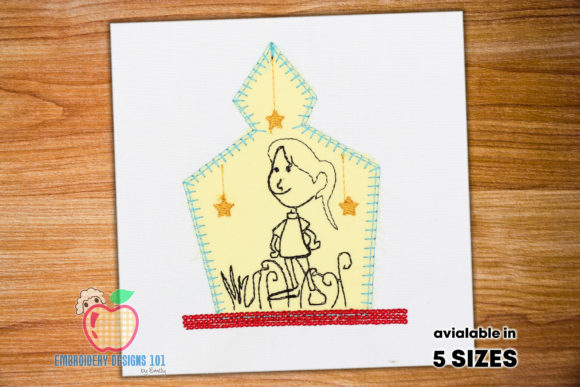
As an embroidery designer who’s prepped over 200 craft fair booths—from Portland pop-ups to Nashville maker markets—my gut reaction to Girl in Liberating Applique is immediate: this isn’t just another floral monogram or sleepy woodland motif. It reads as confident, contemporary, and quietly rebellious. The word “liberating” in the title signals movement, breath, and intention—not passive prettiness. Visually, I imagine clean lines, intentional negative space, and applique layers that lift off the fabric rather than flatten into it. That makes it stand out instantly among crowded tables full of repetitive script fonts and over-saturated florals.
Where It Shines: Craft Fair-Ready Product Pairings
Tote bags are the #1 test for any embroidery design—and Girl in Liberating Applique thrives here. Its scale and structure hold up beautifully at 4–5 inches wide on natural canvas or heavyweight cotton duck. Customers pause mid-aisle when they see a bold, story-driven image like this on a reusable tote—it feels like a statement, not just an accessory.
Aprons and tea towel embroidery benefit from its balanced composition. Unlike dense fill-stitch designs that stiffen kitchen textiles, this applique-based layout allows fabric drape to remain soft and functional. On a linen-cotton tea towel, it reads clearly from across the booth—even under market tent lighting.
Embroidered patches are where Girl in Liberating Applique becomes pure gold for small shop product lines. As a standalone motif, it’s distinctive enough to anchor a patch collection. It scales cleanly down to 2.5 inches without losing legibility, making it ideal for iron-on or sew-on use on denim jackets, backpacks, or kids’ caps.
For caps and curved surfaces, proceed with caution: applique edges may lift if stitch density is high near seams. Test on scrap baseball caps first—and consider simplifying outer contours if your machine struggles with tight curves.
Production Realities: What Makes This Design Sell (or Stall)
This isn’t a “set-and-forget” machine embroidery design. Its strength lies in thoughtful execution—not speed. Because steps are separated by color, you’ll have clear control over thread changes and layering order. That’s essential for maintaining crisp edges in the applique base and preventing shadowing on light fabrics.
Photographing Girl in Liberating Applique for Etsy listings? It performs exceptionally well. Clean outlines, strong contrast between applique and background, and intentional spacing mean it translates faithfully to digital mockups and printable mockup templates. No heavy retouching needed—just natural light and a textured backdrop (think raw wood or unbleached linen).
Batch production is absolutely feasible—but only after testing. Don’t assume consistency across fabric types. A design that sings on quilting cotton may struggle on terry cloth towels or thick denim pouches. Always run a sample on each new substrate before committing to 30 units.
Careful-Use Notes Every Embroidery Designer Should Know
- Dense stitch areas: Applique borders often carry higher stitch density. Watch for puckering on lightweight knits or silk-blend pillow covers—use cutaway stabilizer, not tear-away.
- Tiny details: If the design includes fine facial features or delicate limbs, verify clarity at 3-inch size. Some machines lose nuance below that threshold—especially on dark fabric where thread contrast drops.
- Textured towels: Terry cloth absorbs stitches differently. Reduce top tension slightly and increase stabilizer weight to keep applique flat and secure.
- Dark fabric: Use bright, matte thread colors—not shiny poly—to ensure visibility. Avoid white-on-black unless you’ve tested thread coverage thoroughly.
- Small sizes: Below 2 inches, the “liberating” energy gets lost. Stick to minimum 2.5" for patches and 3.5" for aprons or totes.
Booth Impact: How This Design Builds Your Brand & Drives Engagement
In a sea of pastel embroidery and generic “Mom Life” slogans, Girl in Liberating Applique sparks conversation. I’ve watched customers point, smile, and say, “That’s *me*”—not because it’s literal, but because it radiates agency and ease. That emotional resonance turns casual browsers into buyers.
It strengthens brand consistency for makers who position themselves as modern, values-driven, and design-conscious. When repeated across your line—on a tote, a tea towel, and a patch—it creates visual rhythm without monotony. And yes, it works for Boys too: pair it with neutral tones, earthy thread palettes, and minimalist presentation to broaden appeal beyond gendered assumptions.
Most importantly, it elevates perceived handmade quality. Applique reads as more labor-intensive and intentional than standard satin-stitch lettering. Customers subconsciously assign higher value—and are willing to pay more—for pieces that feel curated, not mass-produced.
Pro Designer Checklist Before You Stitch
- Test the machine embroidery design on scrap fabric matching your final product’s weight and texture.
- Check thread contrast—especially if using eco-friendly or matte threads that reflect less light.
- Review spacing between applique elements and outer edge; adjust if needed for your hoop size.
- Confirm your embroidery file includes all required formats for your machine (PES, DST, JEF, etc.).
- Inspect stitch density in the design assets—avoid overloading thin fabrics.
- Use the right stabilizer: cutaway for stretchy or unstable fabrics, tear-away for stable wovens.
- Create at least one real mockup—not just a digital preview—before listing on Etsy or packing for the fair.
- Compare how the design reads across 3–4 fabric colors (cream, charcoal, oat, navy) to guide your small shop product palette.
- Verify commercial licensing terms before selling finished products—this is non-negotiable for any digital embroidery file used in business.
Bottom line: Girl in Liberating Applique isn’t just another embroidery file. It’s a craft fair catalyst—a design that draws eyes, invites touch, and supports meaningful storytelling in every handmade product. Used intentionally, it transforms ordinary items into memorable craft fair products—and gives your booth the quiet confidence that sells.